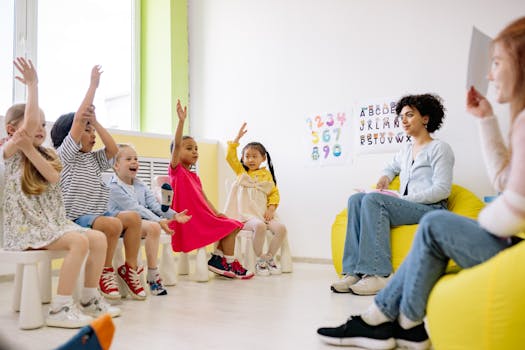
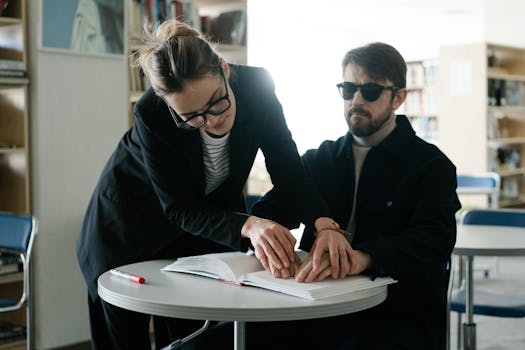
Imagine a classroom where a student who struggles with abstract concepts can actually walk through the human circulatory system, or where a child with mobility issues can virtually explore the ancient pyramids of Egypt. This isn’t science fiction anymore; this is the burgeoning reality of virtual reality for inclusive education. For so long, educators have strived to meet the diverse needs of all learners, often facing limitations in resources and traditional teaching methods. But what if we could offer experiences that were not only engaging but also perfectly tailored to individual learning styles and challenges? That’s where VR steps in, offering a powerful new toolkit to break down barriers and build truly equitable learning environments.
Why VR is a Game-Changer for Diverse Learners
Let’s be honest, a standard lecture or a textbook can only go so far for many students. Some learners thrive with hands-on experiences, others need visual aids, and some require a safe space to experiment without real-world consequences. Virtual reality excels at providing all of these. It’s like stepping into a tailor-made learning module, designed to capture attention and foster understanding in ways never before possible. For students with learning disabilities, sensory processing differences, or even those who are gifted but bored by conventional methods, VR can be the key that unlocks their potential. It’s not just about entertainment; it’s about creating profound, memorable learning moments that resonate deeply.
Bridging Gaps with Immersive Experiences
One of the most exciting aspects of virtual reality for inclusive education is its unparalleled ability to bridge gaps. Think about students who might have physical limitations preventing them from participating in field trips. With VR, they can experience a bustling science museum, a historical reenactment, or even a deep-sea exploration alongside their peers. This sense of shared experience is invaluable for social inclusion and belonging.
Furthermore, VR can provide crucial scaffolding for students who struggle with understanding complex or sensitive topics. For instance:
Social Skills Training: VR simulations can create controlled environments for students with autism spectrum disorder to practice social interactions, read body language, and navigate challenging social scenarios. This allows for repeated practice in a low-stakes setting, building confidence before real-world application.
Empathy Development: Imagine a student experiencing a historical event from the perspective of someone who lived through it, or understanding the daily challenges faced by individuals with specific disabilities. VR can foster a deeper sense of empathy and understanding for diverse experiences.
Abstract Concept Visualization: For subjects like physics, chemistry, or advanced mathematics, VR can transform abstract theories into tangible, explorable worlds. Students can manipulate variables, observe reactions, and see complex processes unfold before their eyes.
Creating Safe and Accessible Learning Environments
Safety and accessibility are paramount in inclusive education, and VR offers unique advantages here. For students who experience anxiety or sensory overload in traditional settings, VR can provide a controlled, predictable environment. Educators can customize the sensory input, reduce distractions, and allow students to progress at their own pace.
I’ve seen firsthand how VR can empower students who might otherwise feel overwhelmed. For example, a student who finds classroom discussions challenging might feel more comfortable expressing their ideas within a virtual space where they feel less exposed. This democratizes participation and ensures that every voice has the opportunity to be heard.
Practical Applications in the Classroom
So, how does this translate into actual classroom practice? It’s not as complicated as you might think!
Engaging All Learning Styles
Traditional teaching often caters to auditory and visual learners, but VR opens up a world for kinesthetic and experiential learners.
Kinesthetic Learners: They learn by doing. VR allows them to physically interact with their learning environment. They can build virtual structures, conduct simulated experiments, or even practice surgical procedures.
Experiential Learners: They learn best through direct experience. VR provides vicarious experiences that are often impossible or impractical in the real world, making learning vivid and unforgettable.
Overcoming Traditional Barriers
Think about the limitations of traditional textbooks. They are static, can be outdated, and struggle to convey the dynamic nature of many subjects. VR, on the other hand, can offer:
Dynamic Content: Imagine exploring the Amazon rainforest and seeing its flora and fauna come alive, or dissecting a virtual frog without the ethical concerns.
Personalized Learning Paths: VR platforms can adapt to a student’s progress, offering additional support or advanced challenges as needed. This means no student is left behind, and no student is held back.
Reduced Need for Physical Resources: For subjects requiring expensive equipment or rare materials, VR offers a cost-effective and accessible alternative.
Considerations for Implementing VR in Education
Of course, like any new technology, there are things to consider. The initial investment in hardware can be a hurdle for some schools, and ensuring educators have adequate training to effectively integrate VR into their curriculum is crucial. It’s also important to select age-appropriate and pedagogically sound VR content. It’s not just about putting on a headset; it’s about using the technology with intention and purpose.
Furthermore, while VR offers incredible benefits, it’s not meant to replace traditional teaching methods entirely. Instead, it should be seen as a powerful supplementary tool that enhances and enriches the learning experience, making education more accessible and engaging for everyone.
Wrapping Up: Embracing the Future of Learning
The journey towards truly inclusive education is ongoing, and virtual reality for inclusive education represents a significant leap forward. By providing immersive, personalized, and accessible learning experiences, VR has the power to break down barriers, foster empathy, and unlock the full potential of every student. It’s an exciting time to be in education, and I believe that embracing technologies like VR is key to building a future where learning truly knows no bounds. So, my advice to educators and administrators? Start exploring the possibilities, even in small ways. The impact you can make might be more profound than you ever imagined.